Somewhere in Austin right now, there’s a plumber who’s never run a single ad, never written a blog post, never thought about SEO a day in his life — and he’s outranking three better plumbers in his own city. Not because he’s good. Because he’s close.
Google’s been quietly paying his rent for years. He never asked for the subsidy. He just cashed it.
Here’s the problem: subsidies get pulled.
Hi, I’m Jeff Payne. You’re listening to The Jeff Payne Show, Episode 70: Proximity Isn’t a Strategy.
We’ve talked before about how much of local ranking comes down to something you don’t control — how close you happen to be to the person searching. That’s still true. Proximity is still doing a huge amount of the work for local businesses today.
But “still true” is doing a lot of work in that sentence. Because in March of this year, Google shipped something called Ask Maps — a Gemini-powered feature that doesn’t just show you the closest match to what you typed; it interprets what you actually meant, cross-references your history, and hands you a recommendation. It’s already rolled out globally. It’s already booking tables and ordering food on people’s behalf.
Right now, Ask Maps lives in a separate tab most people never open. Nobody’s panicking. But that’s exactly what a beta looks like the year before it becomes the default.
Here’s the uncomfortable reframe: proximity was never something local businesses earned. It’s a subsidy Google hands out by default, the same way it used to hand out clicks to any website that answered a question well. And we’ve watched what happens when Google decides it can do the matching itself instead of leaning on distance — it stops rewarding “closest” and starts rewarding “best match.” When that shift hits local, the businesses sitting four blocks from the searcher lose the free ride they never had to earn by building anything.
And here’s the part that should bother you more, because it’s not a future problem — it’s live today. The exact asset that subsidy runs through, your Google Business Profile, isn’t fully yours. Anyone can hit “Suggest an Edit” on your listing. Most of the time it’s harmless. Sometimes it’s a competitor changing your business category — and a category swap is one of the single most damaging things that can happen to a local listing, because the primary category is one of the top three signals deciding whether you show up at all. Google doesn’t tell you who did it. It just quietly asks you to re-verify while your phone stops ringing.
So the thing propping you up right now is borrowed, and the thing it runs through isn’t fully under lock. That’s not a strategy. That’s exposure with a good track record so far.
Here’s what it looks like to never have had that subsidy in the first place — and to be fine with it.
Daniel Goodwin runs Provident 1031. There’s no map pack for 1031 exchange strategy. No searcher typing “1031 specialist near me” and getting handed a recommendation because Daniel happens to be nearby. He never had proximity to lean on, ever.
So he built the other thing instead. A book that hit the Amazon bestseller list. A biweekly byline in Kiplinger. A Masterclass series that’s become his highest-performing lead source. None of that came from Google doing him a favor. It came from making himself recognizable enough that people — and increasingly, AI systems summarizing an answer — go looking for him by name.
That’s not a backup plan. That’s the actual plan, running years ahead of the moment proximity stops carrying anyone.
So here’s the question worth sitting with, especially if you run a local business: if Google didn’t hand you the top spot because you happened to be closest, would anyone still be able to find you? What do you actually have, right now, that isn’t rented?
That’s the show.
PROXIMITY ISN’T A STRATEGY
Somewhere in Houston right now, there’s a plumber who’s never run a single ad, never written a blog post, never thought about SEO a day in his life — and he’s outranking three better plumbers in his own city. Not because he’s good. Because he’s close.
Google’s been quietly paying his rent for years. He never asked for the subsidy. He just cashed it.
Here’s the problem: subsidies get pulled.
Proximity Is Still Doing the Heavy Lifting — For Now
We’ve talked before about how much of local ranking comes down to something you don’t control — how close you happen to be to the person searching. That’s still true. Proximity is still doing a huge amount of the work for local businesses today.
But “still true” is doing a lot of work in that sentence. In March 2026, Google shipped Ask Maps — a Gemini-powered feature that doesn’t just match the closest option to what you typed; it interprets what you actually meant, cross-references your history, and hands you a recommendation.
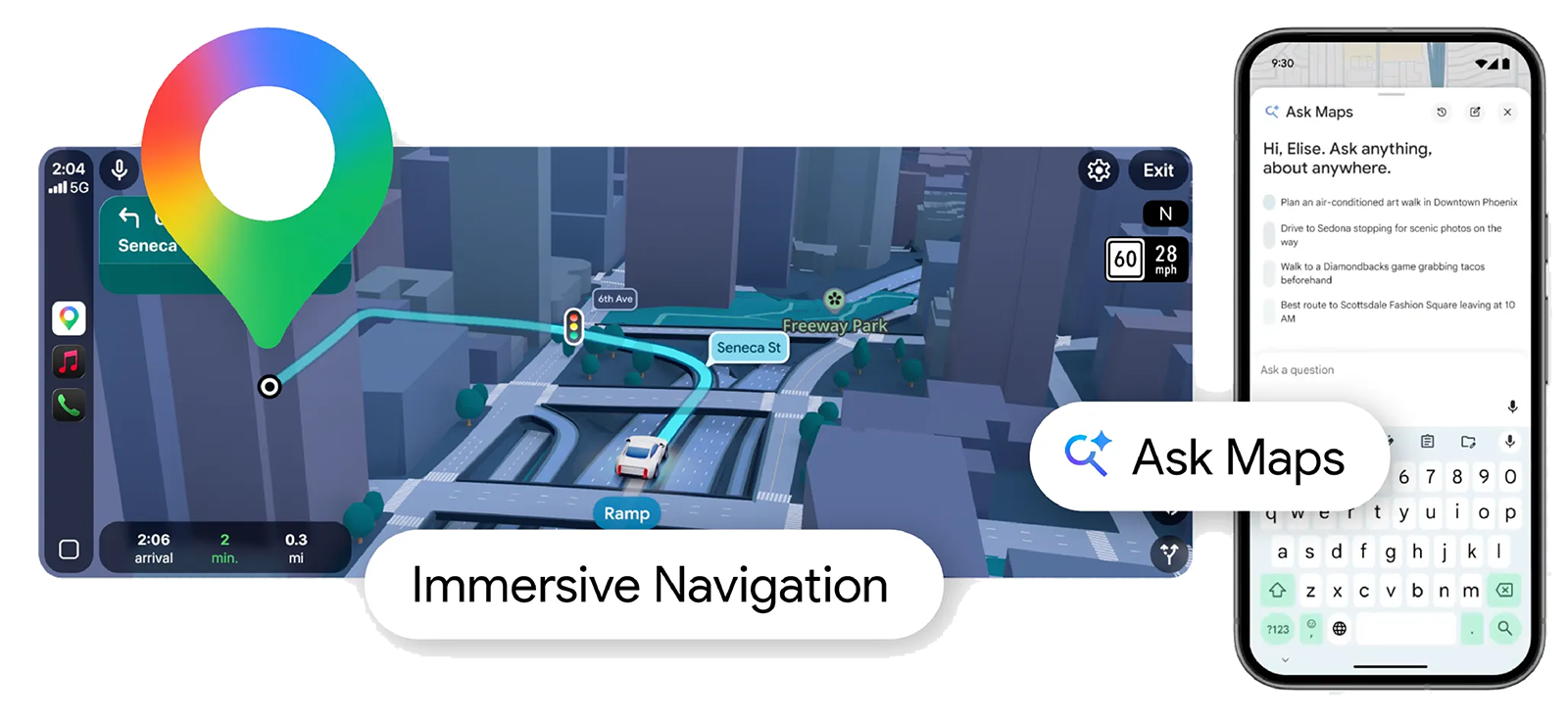
It’s since rolled out globally and, by August 2026, had gained agentic capabilities — booking tables, ordering food, comparing hotel prices — on a user’s behalf.
Right now, Ask Maps lives in a separate tab most people never open. Nobody’s panicking. But that’s exactly what a beta looks like the year before it becomes the default.
Proximity was never something local businesses earned. It’s a subsidy Google hands out by default.
The Subsidy — and the Single Point of Failure Underneath It
Here’s the uncomfortable reframe: proximity was never something local businesses earned. It’s a subsidy Google hands out by default, the same way it used to hand out clicks to any website that answered a question well. And we’ve watched what happens when Google decides it can do the matching itself instead of leaning on distance — it stops rewarding “closest” and starts rewarding “best match.”
When that shift hits local, the businesses sitting four blocks from the searcher lose the free ride they never had to earn.
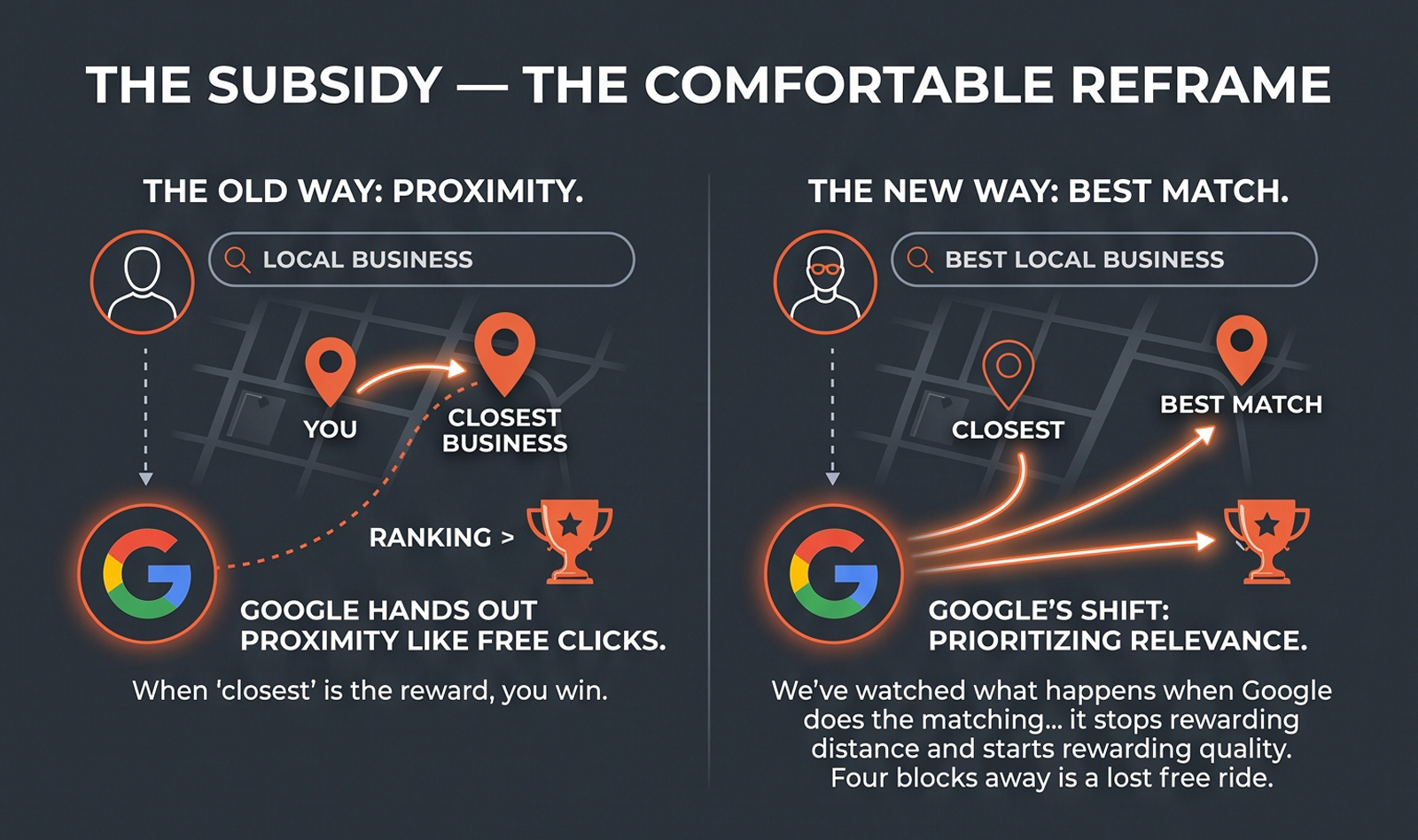
And here’s the part that should bother you more, because it isn’t a future problem — it’s live today. The exact asset that subsidy runs through, your Google Business Profile, isn’t fully yours.
Google’s public “Suggest an Edit” feature lets anyone propose changes to your listing. Most of the time it’s harmless. Sometimes it’s a competitor changing your business category — and a category swap is one of the most damaging edits a local listing can receive, because the primary category is a top-three ranking factor.
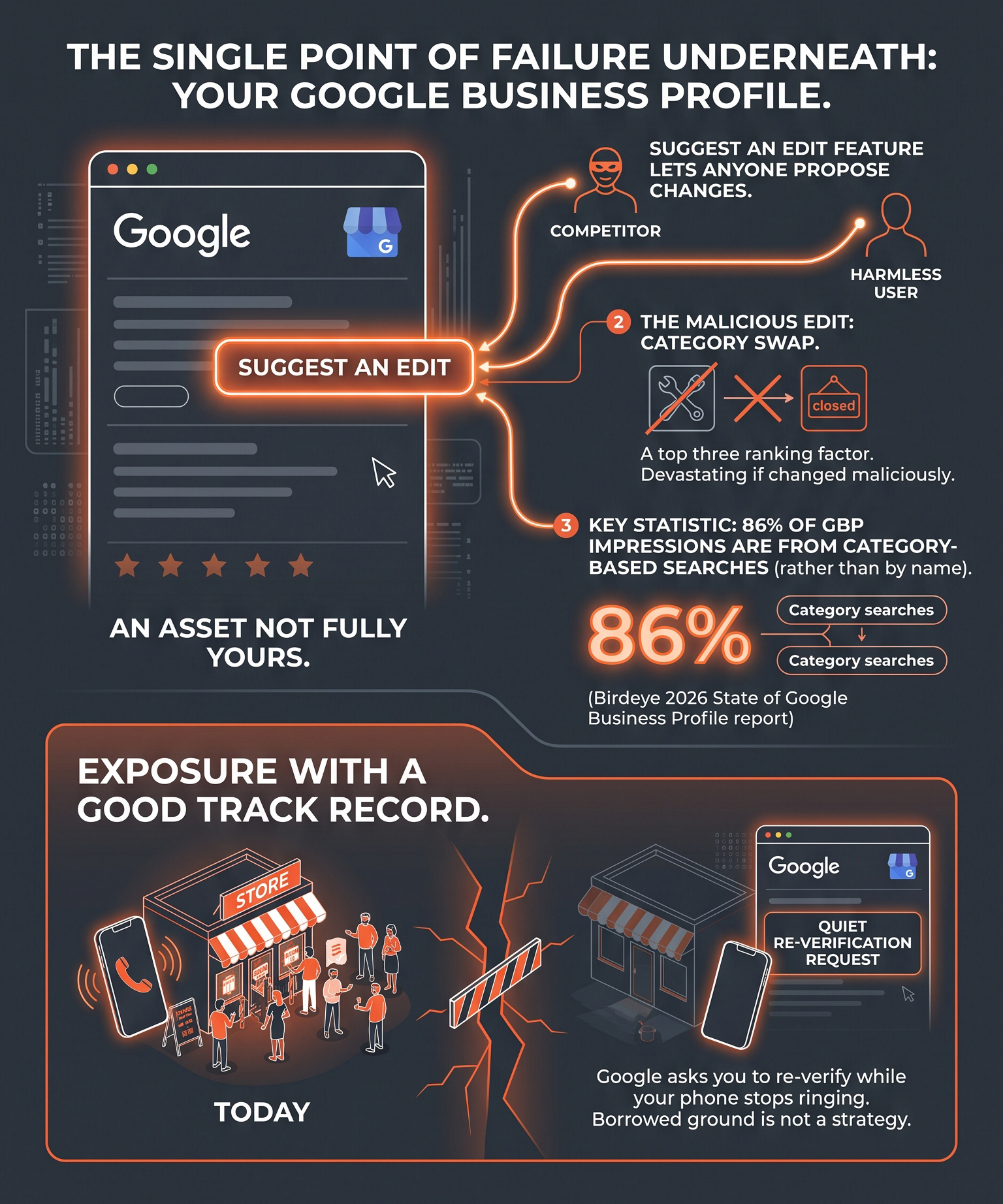
That’s not a small stake either: 86% of Google Business Profile impressions come from category-based searches rather than searches for a business by name, according to Birdeye’s 2026 State of Google Business Profile Report. Google doesn’t tell you who submitted it. It just quietly asks you to re-verify while your phone stops ringing.
So the thing propping you up right now is borrowed, and the thing it runs through isn’t fully under lock. That’s not a strategy. That’s exposure with a good track record so far.


This is one of the best written, most informative email newsletters I’ve ever read!
Thank you for sharing your expertise, and hope you’re doing well.
Beth Zimmerman
Founder, Executive Director

What It Looks Like to Never Have Had the Subsidy
Here’s what it looks like to never have had that subsidy in the first place — and to be fine with it.
Daniel Goodwin runs Provident 1031. There’s no map pack for 1031 exchange strategy. No searcher typing “1031 specialist near me” and getting handed a recommendation because Daniel happens to be nearby. He never had proximity to lean on, ever.
So he built the other thing instead: a book that hit the Amazon #1 Bestseller list, a biweekly byline in Kiplinger, and a Masterclass series that’s become his highest-performing lead source. None of that came from Google doing him a favor. It came from making himself recognizable enough that people — and increasingly, AI systems summarizing an answer — go looking for him by name.
That’s not a backup plan. That’s the actual plan, running years ahead of the moment proximity stops carrying anyone.
86% of Google Business Profile impressions come from category-based searches rather than searches for a business by name
THE MOVE
So here’s the question worth sitting with, especially if you run a local business: If Google didn’t hand you the top spot because you happened to be closest, would anyone still be able to find you?
What do you actually have, right now, that isn’t rented?
If Google didn’t put you in the top spot just because you happened to be closest, would anyone still be able to find you?
COMPLETE THE FORM TO
BOOK A STRATEGY CALL
"*" indicates required fields

COMPLETE THE FORM TO
BOOK A STRATEGY CALL
"*" indicates required fields
Subscribe and Share – WE APPRECIATE YOUR SUPPORT